Patients looking into dental bonding in Alexandria often ask whether it is the same thing as a tooth-colored filling. When comparing composite bonding vs. tooth-colored fillings, both often use the same family of resin-based composites, but the reason for treatment usually differs. Cosmetic bonding mainly changes a tooth’s visible shape, size, or appearance, while a filling restores structure lost to decay, fracture, or another defect. The two can overlap, since a front-tooth filling can look highly natural and bonding can also rebuild damaged structure.
That overlap is why composite bonding in Alexandria starts with an exam. Before recommending either one, a cosmetic dentist in Alexandria checks the tooth’s condition, remaining structure, appearance, bite, and your goals. That diagnosis-first approach is the foundation of Alexandria cosmetic dentistry at Braddock Dental.
What Is the Difference Between Composite Bonding and a Tooth-Colored Filling?
The main difference is purpose. Composite bonding usually improves how a healthy tooth looks, while a tooth-colored filling usually restores a tooth damaged by decay or injury. In many cases, the names describe the reason for treatment rather than two fundamentally different materials.
| Attribute | Cosmetic Composite Bonding | Tooth-Colored Filling |
|---|---|---|
| Common Objective | Improve tooth appearance or minor shape defects | Replace tooth structure lost to decay or damage |
| Material | Usually composite resin | Usually composite resin |
| Typical Application | Visible surfaces, edges, contours, small spaces | Cavities, fractures, defective tooth structure |
| Primary Planning Focus | Aesthetics plus function | Tooth health, structural restoration, and function |
| Appearance | Matched to surrounding teeth | Matched to surrounding teeth when appropriate |
| Tooth Preparation | Often minimal for additive cosmetic changes | Depends on decay, damage, and cavity preparation |
These are common patterns rather than strict clinical categories. Your dentist decides based on what each tooth actually needs.
Composite Bonding Is Often Used to Improve Tooth Appearance
Cosmetic dental bonding adds tooth-colored resin to change how a tooth looks. Dentists use it for tooth reshaping, repairing small cosmetic flaws, or improving visible proportions. Composite bonding for front teeth often addresses chipped edges, small gaps, and uneven shapes.
Bonding can also play a restorative role. The same cosmetic resin restoration technique can rebuild a small broken corner that affects both appearance and function. For larger cosmetic changes, it helps to understand how composite bonding compares with porcelain veneers.
Tooth-Colored Fillings Primarily Restore Damaged or Decayed Tooth Structure
A filling restores a cavity or a missing portion of a tooth. The dentist first assesses the area and removes decay or weakened tissue when necessary. This step, called cavity preparation, leaves a clean, sound space for the composite filling, which is then shaped to fit the tooth.
A small cavity and a cosmetic irregularity can look alike in the mirror. They are different problems, though. A cavity is active damage from dental caries, so the filling must restore tooth structure and function first. At Braddock Dental, tooth-colored fillings for cavities are part of general and preventive dentistry in Alexandria.
Both Treatments Can Use Similar Composite Resin Materials
According to the American Dental Association, resin-based composites generally combine an organic resin matrix with inorganic filler particles and a coupling agent. The coupling agent bonds the filler to the resin so the material holds together as one.
Composites are a broad group of materials, so the resin used for bonding and for fillings is not always identical. Formulations differ in handling, strength, polish, and translucency. A dentist may choose a highly polishable composite for a front tooth and a stronger, more heavily filled one for a molar.
Why the Same Material Can Serve Different Treatment Goals
Picture two patients. The first has a healthy front tooth that looks slightly shorter than its neighbor. The dentist may add a thin layer of composite to lengthen and reshape it, with little change to the natural enamel.
The second patient has a cavity in a lower molar. That tooth needs the decay removed and a restoration designed around the cavity and the heavy forces of chewing.
Both patients may receive composite resin. The clinical problem decides the treatment, and the material follows.
When Would a Dentist Recommend Cosmetic Composite Bonding?
Cosmetic bonding fits best when a tooth is healthy and the concern is mainly how it looks. Even then, your dentist evaluates the enamel, tooth position, bite (occlusion), oral health, and your aesthetic goals first.
Improving Small Chips and Irregular Front Tooth Edges
Composite can be added to a small chipped or uneven edge to restore a more natural outline. A larger break needs a structural evaluation first, and our guide covers repairing chipped front teeth with composite bonding in more detail.
Adjusting Tooth Shape, Width, or Length
Additive bonding can increase the width or length of otherwise healthy teeth, such as naturally small, short, or mismatched front teeth. The goal is better balance with the neighboring teeth, planned around your bite.
Closing Minor Cosmetic Spaces Between Teeth
Composite can sometimes widen the teeth beside a small gap so the space looks smaller or closes, without moving the teeth as orthodontics would. Our article on closing small gaps with composite bonding explains when this approach fits.
Improving Selected Cosmetic Surface Imperfections
Some small surface defects or areas of discoloration can be covered with a thin layer of composite. White spots, enamel defects, and deep internal stains need individual evaluation, since whitening or another treatment may work better.
When Is a Tooth-Colored Filling the Better Treatment?
Cosmetic bonding is often an elective choice. A tooth-colored filling is usually needed when part of a tooth is missing or compromised and must be rebuilt. That makes it a core part of restorative dentistry. Fillings have limits, though. Large defects, deep fractures, or major structural loss may need a stronger restoration.
Treating Cavities Caused by Tooth Decay
Tooth decay starts when mouth bacteria feed on sugars and starches and produce acids. Those acids pull minerals out of enamel, a process called demineralization, and over time can reach the dentin beneath it. When more minerals are lost than the tooth can replace, the weakened area breaks down into a cavity. Very early decay can sometimes be reversed before that point.
Once a true cavity forms, the damaged area usually needs restorative treatment. Your dentist checks how far the decay extends before deciding whether a filling is the right restoration.
Restoring Teeth With Small Fractures or Structural Defects
A tooth-colored filling can restore a small, localized break when enough healthy tooth structure remains around it. Not every crack can be fixed this way. Cracks that extend deep into the tooth need separate evaluation and often a different treatment.
Replacing an Existing Filling That Has Failed
Fillings can wear out over time. A dentist may assess a filling for repair or replacement after finding:
- New decay forming at the edge of the filling
- Gaps or breakdown along the margins
- A chip or fracture in the filling material
- Wear that changes how the tooth feels or functions
An older or slightly discolored filling does not automatically need replacing if it is sealed and working well.
Why Larger Cavities May Need More Than a Filling
The right restoration depends on how much tooth is damaged, how much healthy structure remains, and how much chewing force the tooth handles. When a cavity is too large for a filling to support, an onlay or crown may protect the tooth better.
How Do Composite Bonding and Tooth-Colored Fillings Attach to Teeth?
Both treatments rely on adhesive dentistry, which bonds composite resin to enamel, dentin, or both. The exact steps vary by material and clinical situation.
Enamel and Dentin Provide Different Bonding Surfaces
Enamel is highly mineralized, while dentin has a different structure with more organic material and natural moisture. Because dentin makes bonding more technique-sensitive, dentists match their bonding steps to the layer being treated.
Dental Adhesives Help Composite Resin Bond to Tooth Structure
The dentist conditions the tooth surface, then applies a primer and a bonding agent that links the tooth to the composite. Some adhesive systems combine these steps, and most harden through resin polymerization.
Light Curing Hardens Many Composite Resin Restorations
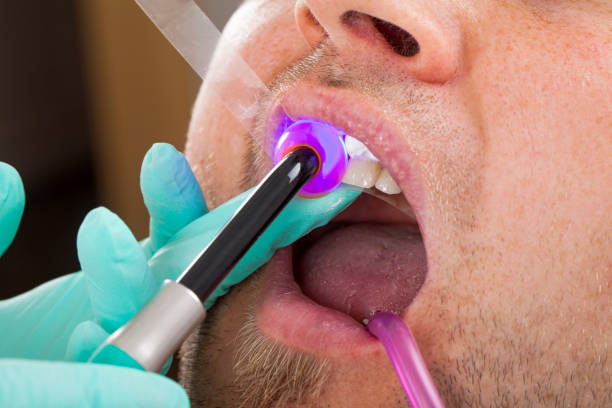
Many direct composites contain light-sensitive initiators that harden the material through polymerization under a dental curing light. Curing sets the composite and gives it strength, but it does not make the restoration immune to wear.
Finishing and Polishing Affect Comfort and Appearance
After curing, the dentist refines the contours, smooths the margins, adjusts the bite, and polishes the surface to reflect light like enamel. Both bonding and fillings need this step, since rough margins can collect plaque and a high spot can make your bite feel off.
Do Composite Bonding and Tooth-Colored Fillings Look the Same?
They can. Both can be designed to blend with natural teeth, especially in visible areas. The level of aesthetic detail depends on where the restoration sits and how much of it shows when you smile.
Both Can Be Matched to the Natural Tooth Shade
Natural teeth are rarely one solid color. They vary in brightness, warmth, and translucency, often within a single tooth. Dentists select composite shades to match these features. You can read more about color-matching composite bonding.
Front-Tooth Restorations May Require More Detailed Aesthetic Layering
Front teeth are seen up close and in bright light. A restoration there may need attention to contour, translucency near the edge, surface texture, and light reflection. Some cases call for layering more than one shade, while others look natural with one.
Tooth-Colored Does Not Mean Completely Invisible in Every Case
Several factors affect how well a restoration blends:
- Material thickness, especially a thin layer over a darker tooth
- The underlying color of the natural tooth
- The size of the restoration
- Natural changes in teeth and composite with age
Well-placed composites usually look natural in everyday conversation. A restoration may still be visible on close inspection, and your dentist should be honest about that during planning.
Is Composite Bonding More Conservative Than a Tooth-Colored Filling?
Not necessarily. The two treatments address different conditions, so comparing how much enamel each removes can be misleading. Cosmetic bonding on a healthy tooth may need very little preparation. A filling must first treat diseased tissue, and the extent depends on what the dentist finds.
Additive Bonding Can Preserve Healthy Tooth Structure
Additive dentistry is a minimally invasive approach that builds onto the tooth instead of reducing it. When a healthy tooth needs extra length, width, or a smoother edge, there is often little or no enamel to remove. Some cases do need minor shaping, so preparation is decided tooth by tooth.
Filling Preparation Depends on the Extent of Decay or Damage
A cavity contains softened, decayed tissue that cannot support a restoration and can keep spreading if left in place. The dentist removes that tissue and shapes the space so the filling can seal and hold. The goal is restoring health and function while keeping as many sound teeth as possible.
The Most Conservative Treatment Is the One That Addresses the Actual Problem
Cosmetic bonding cannot replace needed decay treatment. Covering a cavity would leave the disease underneath. The reverse holds true as well. A filling should not be recommended just because a patient wants a small cosmetic change. The right treatment matches the diagnosis.
How Do Durability, Maintenance, and Repair Differ?
Durability depends on the size and location of the restoration, bite forces, habits such as grinding, the material used, and daily oral hygiene. These factors matter more than the treatment’s name, so no single lifespan applies to every patient.
Chewing Forces Affect Composite Restorations Differently Across the Mouth
Front-tooth restorations face biting and shearing forces along their edges. Back-tooth restorations absorb heavier, repeated chewing pressure. The same broad material family may work in both areas, but the specific composite and design are chosen for the job.
Both Composite Bonding and Fillings Can Wear, Chip, or Discolor
Over time, composite can lose some polish, pick up surface stains, or chip at thin edges. Coffee, tea, red wine, and tobacco can speed up discoloration. Our separate guide explains why composite bonding can stain over time and how to slow it down.
Some Composite Restorations Can Be Repaired Rather Than Fully Replaced
A small chip or worn area can sometimes be repaired by adding fresh composite. Whether repair makes sense depends on the restoration’s condition, the extent of damage, the remaining tooth structure, and why it failed. In some cases, full replacement is the better option.
Regular Dental Exams Help Monitor Restoration Margins and Tooth Health
Routine exams let your dentist check the margins of bonding and fillings, look for new decay, and catch wear, fractures, or bite changes early.
Does Composite Bonding Cost More Than a Tooth-Colored Filling?
There is no universal answer. Fees depend on the complexity of the procedure, the number of teeth, the extent of treatment, the time involved, and the practice’s pricing. The reason for treatment also matters, because it affects how a procedure is classified for billing and insurance.
Treatment Complexity and Number of Teeth Influence Cost
A small, one-surface filling on a single tooth is a contained procedure. Reshaping several front teeth with bonding may take more chair time and detailed aesthetic work. Then again, a large filling on a molar can be more involved than a small cosmetic touch-up.
Cosmetic and Restorative Procedures May Have Different Insurance Coverage
Many dental plans treat elective cosmetic work differently from medically necessary restorative care. Coverage depends on your policy, the reason for treatment, and your available benefits. A filling for a cavity may receive benefits that cosmetic bonding does not. Coverage is never guaranteed either way, so confirm your benefits before treatment.
A Dental Consultation Can Clarify Treatment Options and Estimated Fees
Before comparing costs, ask your dentist to explain the recommended procedure and why it fits your tooth. Then request a treatment-specific estimate for that exact treatment.
How Does an Alexandria Dentist Decide Between Bonding and a Filling?
The decision follows a clear sequence:
- Your concern: what you notice, see, or feel
- Examination: a visual check, plus X-rays when needed
- Diagnosis: what is actually happening with the tooth
- Treatment objective: cosmetic, restorative, or both
- Restoration selection: bonding, a filling, or another option
This order keeps treatment grounded in your tooth’s health.
Evaluating Whether the Tooth Is Healthy or Damaged
The dentist examines the tooth for decay, cracks, existing restorations, and structural defects. X-rays can reveal decay between teeth or under old fillings that a mirror cannot show.
Understanding Whether the Main Goal Is Cosmetic or Restorative
Your concern shapes the conversation. If you came in about a chip on a healthy tooth, the plan can center on appearance. When decay or damage is present, diagnosis comes before cosmetic preference. The dentist treats the problem first and plans the aesthetics into that treatment.
Considering Tooth Position, Bite, and Remaining Enamel
A restoration has to look right and hold up under real chewing forces. The dentist considers how your teeth meet, how much enamel remains, and where the tooth sits in your smile. The aim is a result that works with your bite and preserves sound tooth structure wherever possible.
Have a question about a specific tooth? Contact our Alexandria dental team to talk through your options.
Frequently Asked Questions About Composite Bonding vs. Tooth-Colored Fillings
Is composite bonding the same as a tooth-colored filling?
Not exactly, although both often use similar composite resin materials. Bonding usually improves appearance while a filling restores damaged structure, though some cases involve both.
Can the same composite resin be used for bonding and fillings?
Sometimes, since resin-based composites come in many formulations with different strength, handling, and polish. Your dentist selects the material that fits the tooth and the clinical situation.
Is dental bonding only cosmetic?
No, composite bonding can improve how a tooth looks and restore small areas of missing structure. The reason for treatment determines its role.
Can tooth-colored fillings be used on front teeth?
Yes, composite fillings are commonly used to restore cavities and small defects on front teeth. The dentist matches the color and contour to the surrounding teeth.
Does composite bonding require drilling?
Often very little, since additive cosmetic bonding usually needs minimal preparation that varies by case. If decay or structural damage is present, additional treatment may be needed first.
Is bonding cheaper than a filling?
There is no universal answer, because fees depend on the complexity and extent of treatment and the number of teeth. A consultation provides an estimate based on your needs.
Can composite bonding develop cavities underneath?
Yes, the tooth around and beneath it can, even though composite resin itself does not decay like natural teeth. Good oral hygiene and regular exams help catch problems early.
Cosmetic Bonding and Tooth-Colored Restorations at Braddock Dental in Alexandria, VA
At Braddock Dental in Alexandria, treatment starts with listening. Some patients want to change the shape or look of a front tooth. Others notice sensitivity, a rough edge, or a dark spot that turns out to be decay.
Dr. Geoffrey Caligan reviews the tooth’s health, your bite, and your goals. He then explains whether composite bonding, a tooth-colored filling, or another restorative option makes the most sense. Patients interested in dental bonding in Alexandria, VA, can expect plain answers about each option and what it involves. You can also explore the practice’s approach to cosmetic dentistry in Alexandria, VA.
Schedule a Cosmetic or Restorative Dental Consultation in Alexandria, VA
If you want to improve a chipped, small, or uneven tooth, an evaluation can show whether composite bonding is a good fit. If you are concerned about a sensitive, damaged, or decayed tooth, an exam can confirm what it needs and how to restore it.
Either way, choosing between composite bonding vs. tooth-colored fillings depends on your tooth’s condition and your goals. Schedule a consultation with Braddock Dental in Alexandria to learn how your options differ and what condition your tooth is in. Dr. Caligan will then recommend the most appropriate next step.
